Most Popular Tutorials

Wedding Photography - Lessons Learned
 (127)
(127) 
After successfully finishing several wedding photography assignments I learned a few valuable things, which I am going to share in this article. Here you will find out what the guiding list of shots to consider while doing wedding photography and how to be better prepared to the wedding day. In addition to that I want to share some ways that helped me to produce better photographs and finally made my clients happy. This article though is more about photography techniques, not the business ones. And I should add that the article mostly regards to the photojournalistic style of the wedding photography, when the photographer is transparent and unobtrusive.
Wide Angle Lens
(127)
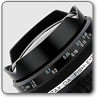
Here comes the time when I am going to talk about wide-angle lens. This lens is my favorite. I cannot say exactly why, but I can give you a few points that I like most in the lens. And those points are: stretching the perspective, making the object that closer to the lens look much bigger (in relation to all other objects), the lens allow you to fit a lot of things into the image and there is certain dynamics added by the lens to the image (it could be because of the distortions, which such lens inevitably bring to the photograph).

Ultimate Makeup
(102)
When you create sellable portraits your goal is to create a flattering image of the client. Many things in such portrait depend on the lighting, pose and other factors, such as props or the environment. Though with some lighting techniques you can reduce or even disguise various imperfections (e.g. blemishes, disproportions and etc.), you can push the limit even further. In this article I want to describe what could be done in Photoshop in order to make the person younger and even add some tan and glow to the skin.
Color in Black & White
(82)
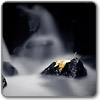
Some people asked me about my approach of getting color elements in black and white images. So in this article I am going to describe several approaches to do this and show the benefits and drawbacks of those.
That Soft Look
 (78)
(78)
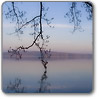
Another question popped up. This time it was about the soft look you sometimes can see on my photographs. And, of course, it's one of many manipulations in Photoshop, which I am going to talk about in this article.

Basic Digital Darkroom
(73)
During our digital photography workflow we do various manipulations, some of them we do so often that we cannot even see the final photograph without them. And here I briefly describe manipulations I do most often in my digital darkroom.
Graphics In Photography
(70)
In this article I want to tell about graphic elements in a photograph and how and what effect they bring. The composition of a photograph, as I see it, has most important meaning and effect on the final result and impression. The graphical elements are the bricks of the composition.

Wedding Album - Part 1
(64)
Currently I am trying to design a wedding album, which then I give to my clients (as their wedding photographer). And in this article I decided to share my ideas and thoughts about this topic. It seems there is not much of such information available. I hope this text will help some of you.
Long Exposure
(58)
Usually the photographs we take have very short shutter speeds - fractions of a second. And there are a lot of articles about such photographs. However when you step into the realm of long exposures, you find many interesting things and effects. In this article I will try to explain several known to me techniques that relate to usage of long exposures.
Hotkeys in Photoshop
(55)
To speed up my work I often use shortcuts (combinations of keys), which invoke certain actions in Photoshop. And here is a short list of most frequently used ones.